
Technology Overview
Illumina Sequencing is the most widely used Massively Parallel Sequencing (MPS) / Next-Generation Sequencing (NGS) technology worldwide. It is a high-throughput approach to DNA sequencing which based on sequencing by synthesis (SBS) chemistry. It involves the use of bridge PCR to clonally amplify the library on the flow-cell and supports single read or paired-end read. Indexed adapters allow multiplexed sequencing on a single lane of a flow cell for time- and cost- effective sequencing run. This technology enables a wide variety of applications for Genomics, Transcriptomics and Epigenetics studies.
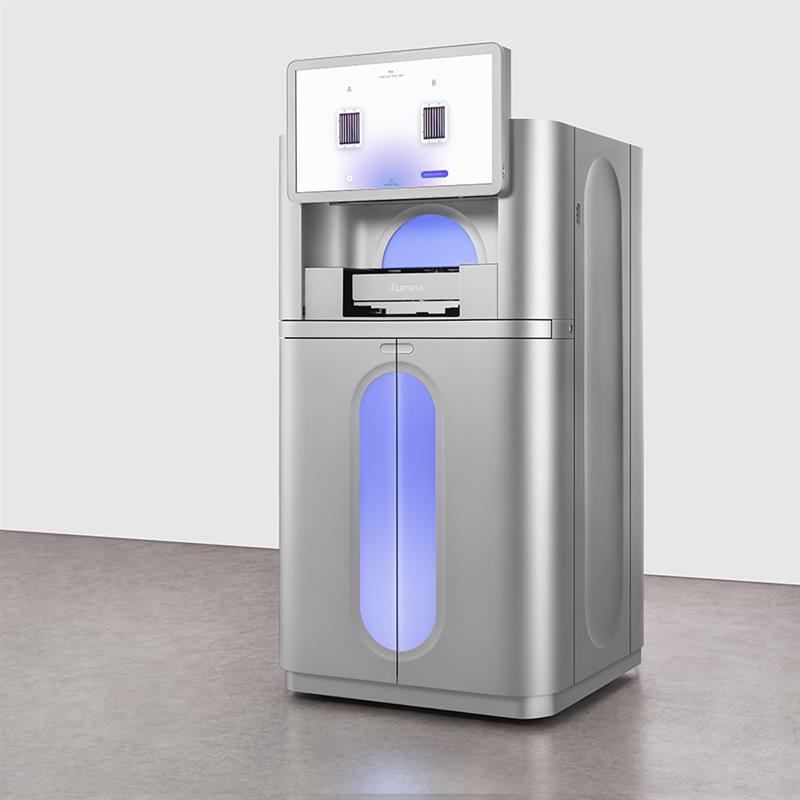
Genomics Core currently houses one NovaSeq X Plus and one NovaSeq 6000 system, both advanced Illumina platforms designed for unprecedented throughput and scalability. NovaSeq X Plus delivers ultra-high data output with improved speed and cost-efficiency, making it ideal for large-scale projects. Moreover, we also have MiSeq sequencer, which supports small scale projects that need rapid data delivery or longer sequencing read length. With the latest hardware and software configurations, MiSeq supports a variety of read lengths, from SE36 (1 x 36 bp) to PE300 (2 x 300 bp). Please contact us for details.
The Core offers full service for Illumina sequencing, including library preparation and sequencing run. Sequencing run service for pre-made library is also available. Please enquire.


Application:
Below table summarized the services done in the Core since Apr-2012.
| Sample Type | Service Type |
| DNA | Whole Genome Sequencing, Human Exome Sequencing, Target Enrichment Sequencing, Amplicon Sequencing, Metagenomics, ChIP-seq, Methylation Sequencing, 16S rRNA Sequencing, and others |
| RNA | Transcriptome Sequencing, Small RNA profiling, and others |
Service Charges and Ordering
Service Charges
The Core offers comprehensive NGS services including nucleic acid extraction, library preparation, NovaSeq/MiSeq sequencing and Bioinformatics services.
Please contact Dr KWOK, Hin ( hinkwok.cpos@hku.hk / 2831-5483) or platform specialists for project discussion.
Price vary with the following factors:
- Throughput or fold coverage required (sequencing reads or bases output)
- Read type and length (Single Read or Paired-end Read, 50 bp to 300 bp)
- Type of work (DNA shotgun sequencing, RNA-seq, small RNA-seq, ChIP-seq, metagenomics etc.)
- Number of samples
- GC content of samples
- Method for library preparation
- Bioinformatics analysis needs
- Special and/or additional requirements
- Affiliated institute (HKU, local academics, oversea academics and commercial company)
Service Ordering
Please submit service request through iLab.
Technical Details
Library Preparation
Different library preparation options are available. Depending on application needs, the Core would provide up to 384-index combinations [1] for library construction and sequencing. We offer free consultation for project discussion. Please contact us to understand it more.
[1] Unique Dual Indices with Unique Molecular Identifier (UMI) are available. Please enquire.
Sequencing Run
NovaSeq 6000 Specifications (from Illumina):
| Read Length | SP Flow Cell | S1 Flow Cell | S2 Flow Cell | S4 Flow Cell | ||
| Single Flow Cell | Single Flow Cell | Single Flow Cell | Single Lane | Single Flow Cell (4 lanes) | ||
| 2 x 50 bp ^ | 65 – 80 Gb | 134 – 167 Gb | 333 – 417 Gb | n/a | n/a | |
| 2 x 100 bp ^ | 134 – 167 Gb | 266 – 333 Gb | 667 – 833 Gb | 400 – 500 Gb | 1600 – 2000 Gb | |
| 2 x 150 bp | 200 – 250 Gb | 400 – 500 Gb | 1000 – 1250 Gb | 600 – 750 Gb | 2400 – 3000 Gb | |
| Reads Passing Filter | Single-end | 650 – 800 M | 1.3 – 1.6 B | 3.3 – 4.1 B | 2.0 – 2.5 B | 8.0 – 10.0 B |
| Paired-end | 1.3 – 1.6 B | 2.6 – 3.2 B | 6.6 – 8.2 B | 4.0 – 5.0 B | 16.0 – 20.0 B | |
| Quality Scores * (v1.5 Reagent Kits) | ≥ 90% of bases above Q30 at 2 x 50 bp | |||||
| ≥ 85% of bases above Q30 at 2 x 100 bp | ||||||
| ≥ 85% of bases above Q30 at 2 x 150 bp |
NovaSeq X Plus Specifications (from Illumina):
| Read Length | 1.5B Flow Cell | 10B Flow Cell | 25B Flow Cell | |||
| Single Flow Cell | Single Lane | Single Flow Cell (8 lanes) | Single Lane | Single Flow Cell (8 lanes) | ||
| 2 x 50 bp ^ | 165 Gb | 125 Gb | 1 Tb | 325 Gb | 2.6 Tb | |
| 2 x 100 bp ^ | 330 Gb | 250 Gb | 2 Tb | 660 Gb | 5.3 Tb | |
| 2 x 150 bp | 500 Gb | 375 Gb | 3 Tb | 1 Tb | 8 Tb | |
| Reads Passing Filter | Single-end | 1.6 B | 1.25 B | 10 B | 3.25 B | 26 B |
| Paired-end | 3.2 B | 2.5 B | 20 B | 6.5 B | 52 B | |
| Quality Scores * | ≥ 90% of bases above Q30 at 2 x 50 bp | |||||
| ≥ 85% of bases above Q30 at 2 x 100 bp | ||||||
| ≥ 85% of bases above Q30 at 2 x 150 bp |
MiSeq Specifications (from Illumina):
| Read Length | MiSeq Reagent Kit Version | Output | Reads Passing Filter | Quality* |
| 2 x 250 bp | v2 | 7.5 – 8.5 Gb | 24 – 30 million paired-end reads | Greater than 75% of bases above Q30 |
| 2 x 300 bp | v3 | 13.2 – 15 Gb | 44 – 50 million paired-end reads | Greater than 70% of bases above Q30 |
^The Core routinely runs NovaSeq with 2 x 150bp read length. For other read length, please enquire.
*Install specifications based on Illumina PhiX control library at supported cluster densities. Performance may vary based on sample quality, nucleotide diversity , cluster density, and other experimental factors. Illumina cannot guarantee the Q30 and quality for low diversity library even with PhiX spiked in.
Workflow

Sample Requirement and Submission
I. Full Service [Library preparation + Sequencing Run]
A. Sample Preparation
Pure DNA and RNA are crucial to ensure consistent library preparation and quality data.
Our recommendations:
- Use column purification
- Apply column re-purification for samples purified with phenol/chloroform methodology
- Treat DNA with RNase
- Treat RNA with DNase
Generally, samples should be:
- Free of inhibitors, e.g. heme (from blood), EDTA and salts
- Free of organic solvents, e.g. phenol, chloroform and ethanol
- Free of cellular debris or proteins
- Dissolved in buffer at proper pH, e.g. 10mM Tris-HCl at pH 8.5
- Not degraded, i.e. high-molecular weight, double-stranded genomic DNA and RNA with high RQN score on Fragment Analyzer
Remarks: For projects applying Illumina Nextera kits, please ensure that the initial DNA does not contain EDTA, and is free of organic contaminants, such as phenol and ethanol. These substances can interfere with the Nextera tagmentation reaction and result in assay failure.
Before sample preparation, please contact platform specialists to confirm sample submission logistics.
B. Sample Requirements
Both DNA and RNA shall be assessed by UV spectrophotometry for purity and quantity estimation before sample submission. Gel photos are also required for some of the DNA-based applications.
After sample submission, sample QC will be performed by the Core platform specialists, which includes
- Qubit quantification for both DNA and RNA samples
- Fragment Analyzer RNA quality assessment for RNA samples (at cost)
Refer to below table for sample submission requirement of each application, please submit sample with minimum volume of 10 μL in a clearly labeled 1.5 mL low-retention microcentrifuge tube.
| Sequencing Type | Sample Type | Protocol Input (based on Qubit value) | CPOS Genomics Core requested minimum amount* | Concentration | A260/280 | RQN^ | Gel Photo Required |
| DNA-Seq | DNA | 1 ng – 1 μg | 200 ng – 1.5 μg | >50 ng/μL | 1.8 – 2.0 | n/a | Y |
| Human Whole Exome-Seq (WES) | Genomic DNA | 0.5 – 1 μg | 1.5 μg | >50 ng/μL | 1.8 – 2.0 | n/a | Y |
| ChIP-Seq | ChIP-DNA | 1 ng – 10 ng | 40 ng | >5 ng/μL | n/a | n/a | Y |
| Human Whole Genome-Seq (WGS) | Genomic DNA | 550 ng | 1.5 μg | >60 ng/uL | 1.7 – 2.0 | n/a | Y |
| Whole Genome Methylation Sequencing (WGMS) | Genomic DNA | 50 – 100 ng | 150 ng | >2 ng/uL | 1.7 – 2.0 | n/a | Y |
| cfDNA | 1 – 20 ng | 4 ng | >0.2 ng/uL | 1.7 – 2.0 | N | ||
| FFPE DNA | 40 ng | 100 ng | >1 ng/uL | n/a | N | ||
| Whole Genome Bisulfite-Seq (WGBS) | Genomic DNA | 250 ng | 1.5 μg | >50 ng/uL | 1.8 – 2.0 | n/a | Y |
| Reduced Representation Bisulfite-Seq (RRBS) | Genomic DNA | 100 ng | 500 ng | >50 ng/uL | 1.8 – 2.0 | n/a | Y |
| rRNA-depleted RNA-Seq | Total RNA | 100 ng – 500 ng | 300 ng | >30 ng/μL | 1.8 – 2.2 | >=7 | N |
| Poly-A mRNA-Seq | Total RNA | 100 ng – 1 μg | 300 ng | >30 ng/μL | 1.8 – 2.2 | >=7 | N |
| Small RNA-Seq / miRNA-Seq | Total RNA | 100 ng – 500 ng | 300 ng | >30 ng/μL | 1.8 – 2.2 | >=7 | N |
* We request more than protocol input amount because of 2 reasons:
(1) we need extra for sample QC before library construction.
(2) we note that most users quantify samples with O.D. measurement, e.g. Nanodrop, which in most cases over-estimate DNA/RNA quantity.
^For RNA samples with RQN below 7, we have prior experience successfully constructing libraries for sequencing despite the lower quality. In such cases, we will provide you with recommendations on how to proceed further to optimize the results.
We will keep samples properly and return any leftover.
If your samples do not meet above requirements, please contact us and we can seek alternatives together.
C. Sample Submission
To request a service, please utilize iLab and ensure to upload the completed sample submission form that corresponds to the application. As CPOS is in the process of implementing Agilent SLIMS for SS100 and SS300 projects, the forms for both services are tailor made.
- For SS100 service (DNA-Seq project): Sample-Submission-Form-SS100 (and attach the DNA gel photo with appropriate size marker to the iLab job)
- For SS300 service (RNA-Seq project): Sample-Submission-Form-SS300
- For other NGS services : Sample-Submission-Form
Please contact our colleagues in advance (via phone/email) prior to your on-site sample submission.
We encourage users to submit a single tube of pre-pooled libraries for sequencing service. Each submitted tube of library or library pool shall undergo library QC by the Core. This includes Qubit and qPCR for quantification and Fragment Analyzer for size QC.
Index information shall be sent to the Core before library submission. Please provide the i5 index sequence (if any) in its forward strand orientation. Here are the guidelines using BLAST search to check the index sequence orientation.
IMPORTANT: Providing wrong index sequences may lead to failure in demultiplexing, and may affect reads assignment for other libraries sharing the same sequencing lane. Extra charges may apply in these circumstances.
General submission requirements for each tube of pre-made library:
| Sequencing platform | NovaSeq X Plus | MiSeq |
| Library concentration (ng/µL), estimated by Qubit assay | ≥ 2.5 | ≥ 2 |
| Library concentration (nM), estimated by QPCR assay | ≥ 5 | ≥ 5 |
| Volume (µL) | ≥ 15 µL for 20-400 Gb service ≥ 20 µL for > 400 Gb service | ≥ 20 |
- Optimal library size is 200 – 800 bp.
- Colorless and delivered in 1.5mL microcentrifuge tubes.
- Free of adapter dimer contamination.
- Actual volume required may depend on the run type. For libraries with difficulties meeting the above requirements, please inquire.
Attach the information in iLab:
- Library Submission Form (soft copy in excel format)
- Official library preparation protocol
- Index i7 and i5 sequences
- Index i7 and i5 sequences with full adapter sequences (if customized protocol or custom ordered adapter oligo used)
Please consult platform specialists before submission.
Data Collection
Overview
Once data is available, users will be notified via email. Details of data colocation, please refer to CPOS Bioinformatics Core page.
Terms of Service
Data Throughput
Please refer to Technical Details for the information.
The actual throughput, however, will vary with the following factors:
- Cluster Density
- GC content of the samples
- Reagent lots
- Other run-to-run variations
Data Quality and Availability
We will in good faith produce the best output and quality data to all collaborators and users.
Any issues will be discussed openly before, during and after the run.
Data at various steps are also available to share with collaborators and users upon request.
Turnaround Time
| NovaSeq X Plus | MiSeq | ||
Full service:
| 2-4 weeks | Full service:
| 2-3 weeks |
| 3-5 weeks | ||
| Per-lane sequencing-only service (per lane / per flow cell) Consolidated sequencing-only service (sequencing pool with other projects) | 1-3 weeks 1-3 weeks | Sequencing-only service * (per flow cell) | 1-2 weeks |
Turnaround Time is counted from the time the samples pass our QC criteria to the time the results are delivered.
Turnaround Time is valid for project size <= 80 samples. Please contact us for service TAT info if project size >80 samples.
Turnaround Time is valid while stock reagent available, else additional several weeks for reagent ordering and delivering will be needed.
CPOS is willing to help researchers on R&D projects and urgent needs, please don’t hesitate to discuss with us about your plan.
* Adapter Trimming will NOT be selected by default for MiSeq Sequencing run service. If you need Adapter Trimming, please specify prior to project confirmation.
Contact
Dr KWOK, Hin
Ms FUNG, Joyce


